
Vocabulary is often underestimated and overlooked — yet it is one of the most important aspects of language acquisition. Research shows that intentional vocabulary teaching accelerates overall L2 acquisition, supporting reading, listening, speaking, and writing skills (Schmitt, 2008; Nation, 2001; Yousefi & Biria, 2018).
However, teaching vocabulary effectively can take time, and in jam-packed curricula, it often receives little attention beyond the initial introduction of new words. Effective instruction requires careful planning and resources, as students need repeated exposure, practice, and meaningful opportunities to notice and use words. How can teachers ensure their students’ vocabulary needs are met? Two especially effective approaches involve creating a vocabulary-rich learning environment and engaging learners in their own vocabulary acquisition. Both will be discussed in this article.
A strong vocabulary programme starts with the learning environment. Students benefit from consistent exposure to words in context, chances to notice and use new vocabulary, and guidance in linking it to existing knowledge. A vocabulary-rich environment doesn’t occur by chance — it requires careful planning, clear structure, and responsiveness to learners’ needs.
Key strategies to foster such an environment:
- Language-rich texts: Authentic, meaningful texts provide repeated exposure to vocabulary. Texts that are engaging, relevant, and level-appropriate encourage active interaction with new words rather than memorisation.
- Make vocabulary cross-curricular – Consistency strengthens learning:
- Agree on common academic language across subjects (e.g., analyse, evaluate, justify, infer)
- Create a shared dictionary or glossary
- Hold cross-department discussions on tiered vocabulary and progression
- Opportunities for active use – Vocabulary sticks when students use it:
- Structured Talk
- Think-pair-share with sentence frames
- Academic discussions requiring specific vocabulary
- Writing Practice
- Short responses using target words
- Paragraph scaffolds
- Guided editing focusing on word choice
- Structured Talk
- Classroom Routines
- Predictable habits:
- “Word of the Week”
- “Vocabulary Vault” (words added by students)
- Predictable habits:
- Glosses: Bilingual or monolingual glosses scaffold understanding, especially for lower-level learners or academic vocabulary.
- Schemes of Work (SoW): Systematic integration ensures learners encounter key words multiple times. Planning vocabulary explicitly avoids gaps and supports long-term retention.
- Explicit word lists and knowledge organisers: Highlighting key terms and organising them visually or digitally helps learners focus, track progress, and review efficiently. Knowledge organisers also encourage connections between related words and concepts.
- Focus on form: Teaching classifications, parts of speech, collocations, and grammatical features helps learners remember and use words accurately, supporting fluency.
- Linking L2 to L1: Connections with a learner’s first language can accelerate comprehension and retention. Some learners benefit from translation, others from context or L2 definitions.
- CEFR-banded resources: Using CEFR levels to anticipate unknown words helps plan targeted instruction while avoiding unnecessary simplification. AI tools and corpora can identify high-frequency or academic vocabulary.
- Multi-sensory approaches: Listening, speaking, writing, and gesturing words help consolidate meaning and form. Reading a word aloud, writing it in sentences, and discussing it reinforces both memory and usage.
- Gamification: Word games, quizzes, and collaborative tasks can enhance motivation, particularly with challenging or abstract vocabulary, while complementing structured teaching.

Linking Environment and Learner Autonomy
A truly effective vocabulary-rich environment is not just about what the teacher does — it is also about how learners interact with language. Research shows vocabulary learning is most successful when students actively notice, practise, and recycle new words (Schmidt, 1990; Schmitt, 1997). One powerful approach is encouraging learners to create their own taxonomies of vocabulary-learning strategies (VLS).
A taxonomy is a structured way of organising ideas into groups or categories so patterns become clearer and easier to work with. It helps learners identify, sort, and reflect on strategies they naturally use — or could use — to learn new vocabulary.
Language learning is deeply personal. Even when someone is learning a few phrases for an upcoming holiday, they instinctively choose strategies that align with their preferred learning strategies. Most people remember experimenting with ways to make new words stick: creating mnemonics, writing them in a table, or translating them into their first language. Each strategy helps secure new vocabulary firmly in the learner’s lexis.
In the classroom, learners should be encouraged to develop strategies that align with their preferred learning strategies — some may translate into L1, others use CEFR-banded definitions, flashcards, or visual organisers. When learners classify and reflect on what works best, they gain ownership, increase engagement, and enhance retention. As Schmitt (1997) and Fan (2020) note, vocabulary learning strategies are most effective when learners personalise them; creating their own “taxonomies” helps them notice, retain, and apply new words.
In short, a vocabulary-rich environment and learner autonomy reinforce each other: the environment provides repeated, meaningful exposure and structured opportunities, while learners actively shape their learning pathways. Together, these elements maximise vocabulary growth and overall L2 acquisition.

The Takeaway
Intentional, structured vocabulary teaching is not an add-on; it is the foundation of successful language acquisition. A combination of a vocabulary-rich environment, multi-sensory engagement, structured planning, and learner autonomy ensures students learn new words and use them confidently across reading, writing, listening, and speaking. By fostering these practices, teachers set learners on a path to academic success and lifelong language growth.
Language Learning that may be of interest:
Get a special discount by quoting code AISLMALL during CHECKOUT.
Language Learning – Rosetta Stone

Rosetta Stone, Inc., a division of IXL Learning, is dedicated to changing people’s lives through the power of language education. The company’s innovative digital solutions drive positive learning outcomes for the inspired learner at home or in schools and workplaces around the world. Founded in 1992, Rosetta Stone uses cloud-based solutions to help all types of learners read, write, and speak more than 30 languages, including several endangered languages.
Live English Class 1 on 1 – Palfish
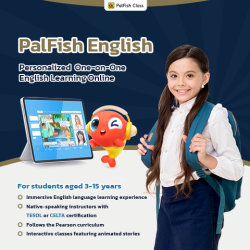
PalFish Class offers personalized online English lessons for kids, featuring Pearson-accredited content and tailored to global standards like CCSS and CEFR. With 50,000+ certified native-speaking teachers and AI-driven tools, the platform ensures engaging lessons, after-school support, and quality education.
Support Reading Tool – ReadWorks
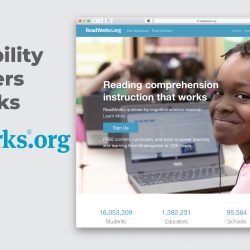
ReadWorks is a nonprofit educational technology organization that provides free, high-quality reading comprehension resources for K–12 students. It offers a vast library of online passages, articles, and ebooks, along with vocabulary support, question sets, and instructional routines based on the science of reading. ReadWorks is widely used by educators to improve students’ reading skills and is particularly focused on supporting under-resourced communities.