As part of my Doctor of Education EdD through The University of Bath, I am working on a final thesis titled ‘GenAI and English language learning: a case study from an international school in China’. In addition, through the 24-25 academic year, I have co-facilitated a Professional Learning Community at AISL Harrow Beijing focused on Language and Learning. This group researched, discussed, and implemented guidelines and strategies for supporting Upper School students’ language development across the curriculum. One of the highlights of the PLC was the in-depth dialogue we had regarding the enormous potential of GenAI for language development when used effectively. Naturally, we also discussed the potential harms and barriers to effective use. What follows, is a short (and slightly adapted) extract from my research, with insights from AISL Harrow Beijing’s Language and Learning PLC included to illustrate practical applications of GenAI for language development.
GenAI programmes, such as Microsoft Co-Pilot, DeepSeek, and ChatGPT, have immense transformative potential in the field of education and have already begun to reshape teaching, teaming, and assessment across the educational spectrum (Jauhiainen and Guerra, 2023). As such, schools and educators need to consider the role and use of GenAI carefully in order to maximise its benefits while minimising the potential drawbacks (UNESCO, 2024). However, due to the nascent nature of many GenAI applications, there remains a ‘paucity of research’ with regards to their actual use in specific educational contexts (Ogugua et al., 2023, p.7). This leads to pockets of good practice, but overall inconsistencies in use, which reduces the positive impact and potentially exacerbates the negative effects.
In the field of English Language Learning (ELL), GenAI has ‘paradigm-shifting’ potential (Al-khresheh, 2024). The positive applications of GenAI for ELL, include: live interaction in the target language (Kohnke et al., 2023); realistic language exposure (Van Horn, 2024); opportunities for tailored learning (Liu et al., 2023); the creation of engaging learning materials (Jauhiainen and Guerra, 2023); the generation of targeted language activities for reading (Kohnke et al., 2023); the development of a range of activities for vocabulary learning (Kohnke et al., 2023); the production of a range of materials, e.g. model texts, to support students’ writing (Ogugua et al., 2023); and, the provision of feedback on students’ language use (Liu et al., 2023).

Ultimately GenAI can potentially support any and all aspects of language development when used well. Space does not allow for a more extensive discussion of each area listed above, but for illustrative purposes, I have included a section on ‘live interaction and communication’ which is perhaps one of the most powerful and beneficial applications of GenAI programmes for ELL.
Vygotsky’s sociocultural theory suggests that social interactions are key to students’ cognitive and linguistic development. More recently, Long (2017) proposed an ‘Interaction Hypothesis’ which emphasises the fundamental role of interaction on language development. Under both sociocultural theory and the Interaction Hypothesis, language learning takes place most effectively when students have the opportunity to engage in active communication and receive immediate/timely responses to and/or feedback on their communication (Long, 2017). As such, every conversation or dialogue a learner engages in serves to further build and develop their linguistic repertoire and confidence. As students interact they apply their language knowledge and adjust or develop it based on their partner(s) response(s). For many students, finding adequate opportunities for interaction in the target language has traditionally been a challenge.
GenAI chat-bots, however, provide a realistic, instant, and always-accessible platform for English language learners to interact on any topic in the target language (Fryer et al., 2020). This essentially simulates an authentic interaction, providing a multitude of opportunities for live interaction (Kohnke et al., 2023). In addition, chat-bots are able to continuously learn and adapt based on prior interactions and can act as highly intelligent and ‘tireless language learning assistants’ (Kohnke et al., 2023, p. 538). The immediacy of the feedback and the adaptability of the software to the users’ responses offers significant advantages in supporting language learning.
GenAI can, for example, be used for debate practice, with the student(s) taking one side of the debate and asking GenAI to take the other. This allows for a written debate (or spoken in some apps) to take place on the motion between the student(s) and the chat-bot which may enhance both critical thinking skills and written language use (Farrokhnia et al., 2024).
This ability of ChatGPT and similar apps to offer real-time responses can facilitate an interactive learning environment (Chiu et al., 2023), potentially increasing student engagement, confidence, and language development (Liu et al., 2023). One application of this at AISL Harrow Beijing comes from a biology teacher (and Head of Year 10), Ms Lizzie Siu, who provide her class with the below instructions:
Send a message to let the bot know how old you are, what your GSE is, and what you are interested in. For example: “Hi. I am a 13-year-old student with a GSE level of 32. I want to practice my reading, and I am very interested in evolution. Can you make a comprehension task for me?”
Read the information given.
Answer the questions and ask the bot if you got them right.
Screenshot part of your conversation.
The student feedback on this activity was overwhelmingly positive with 21/23 students agreeing or strongly agreeing that this was a good way for them to practice their reading (2 were neutral), and 22/23 agreeing or strongly agreeing that they could understand the texts given to them (1 was neutral).
Nonetheless, GenAl is not without its challenges which are well documented and discussed in the mainstream media and academic literature. A few of these include a potential pedagogical paradigm shift; overdependence; a lack of training and guidance for students and teachers; decreased human-to-human interaction; cultural concerns; potential bias; and ethical concerns as well as plagiarism.

In order for schools to maximise the potential benefits of GenAI for ELL (and indeed for education in general) teachers and school leaders should recognise that human educators and collective human action remain as, if no more, essential in the age of GenAI (UNESCO, 2024). ln terms of specific action points stemming from this fundamental realisation, schools and teachers should provide effective CPD for staff, with UNESCO’s 2024 framework providing an excellent guide; emphasise and be grounded in sound pedagogical principles (e.g. the interaction hypothesis and the importance of human-to-human interaction); seek to create human–Al collaborative learning ecosystems which draw on the best of both human instruction and interaction and the opportunities offered by GenAI; and implement clear guidelines for staff and students as to appropriate use.
Overall, the presence and power of GenAI cannot and should not be ignored. The more we, as educators, engage with and trial various uses and applications of GenAI, the more likely we are to maximise the benefits and minimise the potential harms both in terms of the impact on language development and the effects on education more generally.
“GenAI programmes, such as Microsoft Co-Pilot, DeepSeek, and ChatGPT, have immense transformative potential in the field of education and have already begun to reshape teaching, learning, and assessment across the educational spectrum.”
Language Learning that may be of interest:
Get a special discount by quoting code AISLMALL during CHECKOUT.
Digital Book Platform – Unite for Literacy
Unite for Literacy is an free online library that offers digital books for young children that are written and/or narrated in 60+ languages. This library is an incredible resource for multilingual learners, their families, teachers and caregivers.
Language Learning Magazine – Magazine International
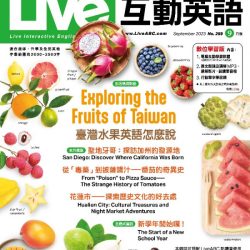
Magazine International (Asia) Limited offers one-stop subscription services to readers of all age. The company represents international publications such as The Economist, National Geographic, Reader’s Digest and over hundreds of other world-renowned titles, as their official appointed agent serving the local community.
Language Learning – Rosetta Stone

Rosetta Stone, Inc., a division of IXL Learning, is dedicated to changing people’s lives through the power of language education. The company’s innovative digital solutions drive positive learning outcomes for the inspired learner at home or in schools and workplaces around the world. Founded in 1992, Rosetta Stone uses cloud-based solutions to help all types of learners read, write, and speak more than 30 languages, including several endangered languages.
Language Learning – uTalk

uTalk is a British language company based in London UK. Established over 30 years ago, it has built up the knowledge and expertise of what it takes to learn languages. Its teams of speakers, translators and voice artists create the wide range of languages offered.
Live English Class 1 on 1 – Palfish
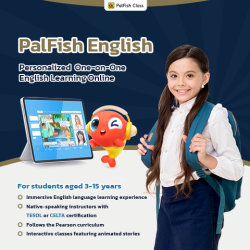
PalFish Class offers personalized online English lessons for kids, featuring Pearson-accredited content and tailored to global standards like CCSS and CEFR. With 50,000+ certified native-speaking teachers and AI-driven tools, the platform ensures engaging lessons, after-school support, and quality education.