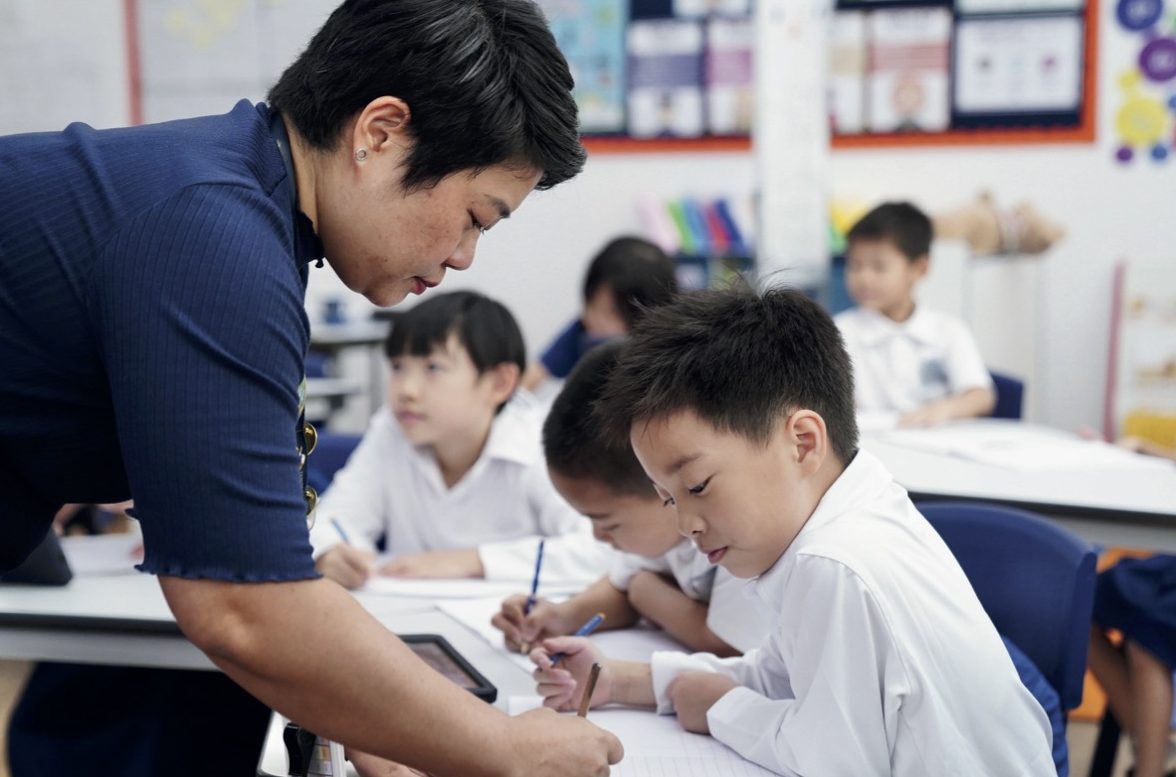
Across international education, there is an increasing recognition that the purpose of schooling extends beyond the acquisition of knowledge alone. While literacy, numeracy and strong subject foundations remain essential, there is a growing demand for children to develop the ability to communicate ideas with confidence, creativity and cultural awareness. At Harrow Nanning, this understanding has shaped a deliberate focus on creative reskilling through storytelling, media production and oracy, ensuring children are prepared for the communicative demands of the modern world.
Storytelling sits at the heart of this work. Long before digital technology, storytelling was the primary means through which societies shared knowledge, values and identity. In the classroom, it remains a powerful cognitive tool. When children are taught to construct narratives, whether spoken, written or visual, they are required to organise ideas, select precise language and consider audience and purpose. These processes strengthen comprehension, deepen understanding and support long term retention across subjects.
What has changed in recent years is the form storytelling takes. Increasingly, children encounter and produce narratives through film, audio, animation and multimodal texts. At Harrow Nanning, media production is viewed not as an additional skill, but as an extension of literacy. When children create a short documentary in history, a narrated explanation in science, or a recorded justification in mathematics, they are translating subject knowledge into meaningful communication. This re-encoding of learning requires clarity of thought and secure understanding, reinforcing core curriculum aims rather than distracting from them.
Cultural literacy underpins this work. For children to communicate effectively, they must understand the cultural contexts in which stories and media are created and received. This includes awareness of diverse perspectives, historical narratives and media conventions, as well as the ethical responsibilities that accompany communication. In an environment where children are constantly exposed to digital content, the ability to question and interpret media critically becomes essential. Children are encouraged to ask who created a text, for what purpose and whose voices are represented or missing.
From a pedagogical standpoint, creative reskilling at Harrow Nanning is grounded in explicit teaching and structured practice. Clear modelling of narrative forms, vocabulary and presentation techniques ensures that creativity is supported by discipline. Scaffolding plays a crucial role, particularly for children learning in a bilingual context, enabling all learners to access high expectations. Once foundational knowledge is secure, creative outcomes provide meaningful opportunities for children to apply and deepen their understanding.
In practice, many children demonstrate their strongest thinking when given opportunities to communicate orally or through media before writing. A carefully rehearsed spoken explanation or a structured presentation can reveal conceptual understanding that may not yet be secure in written form. These approaches do not replace writing. Instead, they build confidence, vocabulary and clarity, which can then be transferred into written outcomes with greater success.
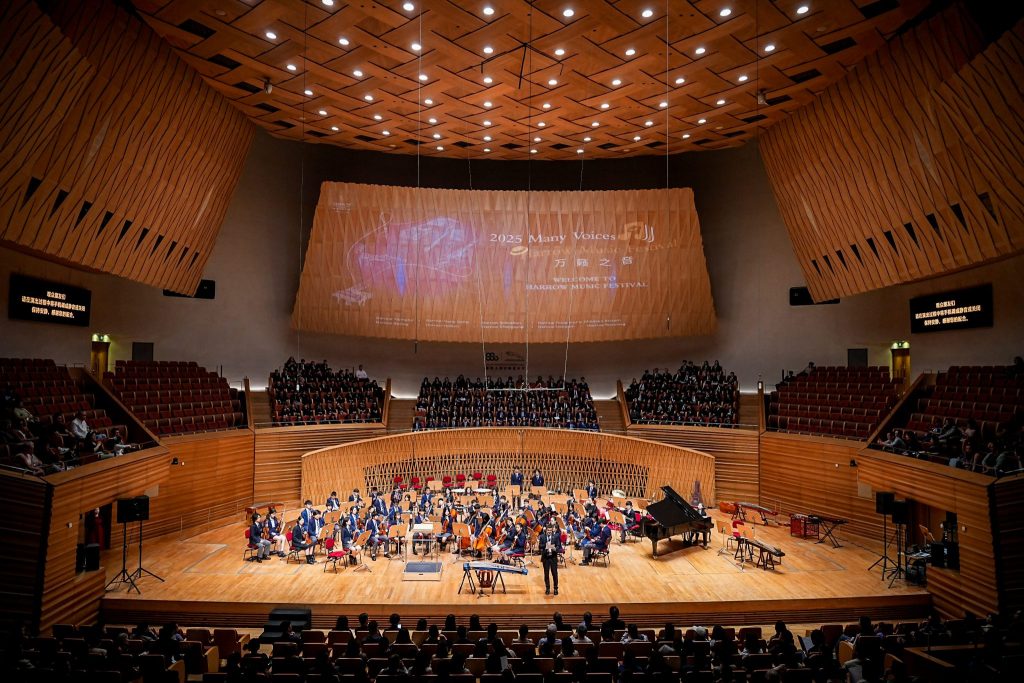
At Harrow Nanning, this commitment to communication is reflected in several whole school initiatives. The introduction of LAMDA public speaking pathways will further provide children with structured training in articulation, projection, expression and audience awareness. These skills directly support storytelling and narrative competence, while also developing confidence in formal spoken language. Children learn that effective communication is not improvised, but rehearsed, refined and purposeful.
Business and enterprise style competitions further strengthen these skills by placing children in authentic communicative contexts. Through pitching ideas, justifying decisions and responding to questions, children are required to combine subject knowledge with persuasive storytelling. These experiences mirror real world situations where ideas must be clearly framed and defended. Crucially, children are supported through modelling, rehearsal and feedback, reinforcing the message that high quality communication is learned through practice rather than performance alone.
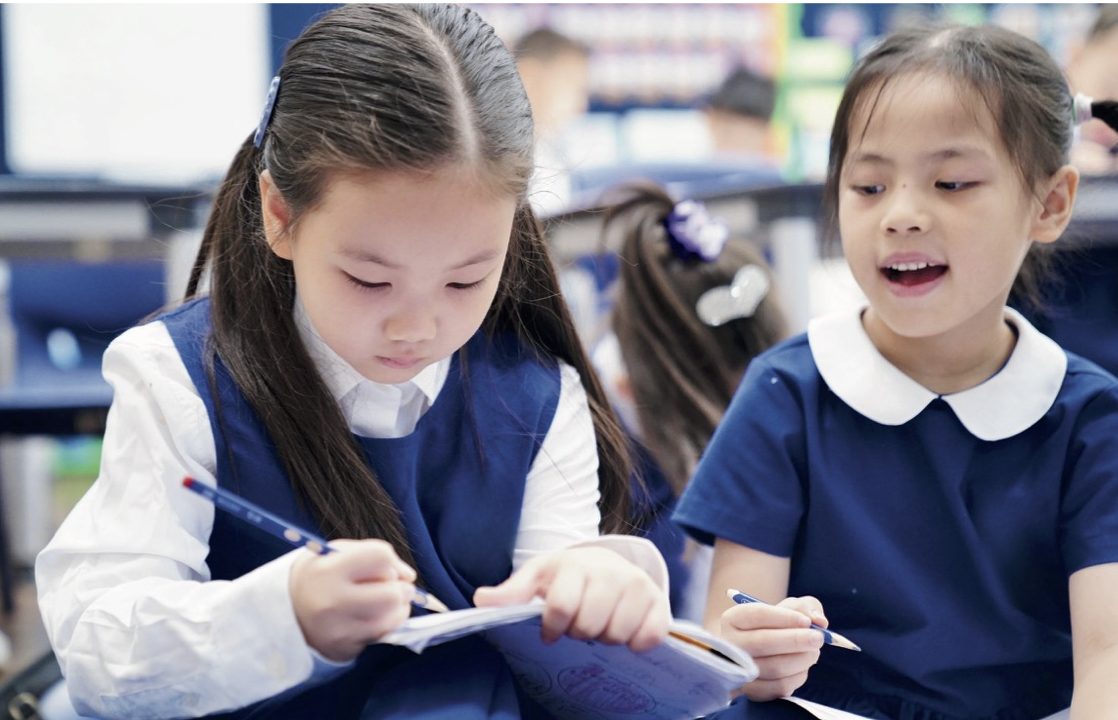
More recently, whole school professional development focusing on writing has placed talk at the centre of composition. Talk for writing approaches have been used to emphasise oral rehearsal, shared language structures and collaborative storytelling. Children internalise narrative patterns through discussion, imitation and performance before committing ideas to paper. This reflects a traditional understanding of literacy development, while aligning with contemporary research highlighting the central role of oracy in writing quality.
The emphasis on storytelling, media production and cultural literacy at Harrow Nanning reflects a broader commitment to educating the whole child. Beyond academic success, children are being equipped with the confidence and competence to express ideas clearly, adapt communication for different audiences and engage critically with the world around them. These are skills that will remain relevant regardless of future pathways.
Creative reskilling should not be viewed as an additional demand on the curriculum. When embedded thoughtfully, it strengthens subject learning and supports inclusion. A history unit culminating in a narrated account, a science lesson ending with an explanatory video, or an English sequence exploring narrative through both text and performance all deepen understanding while developing transferable skills.
Ultimately, the renewed focus on storytelling and communication represents a return to enduring educational principles. Knowledge matters most when it can be shared, questioned and understood by others. By embedding creative reskilling within its curriculum and culture, Harrow International School Nanning is ensuring that children are not only knowledgeable, but articulate, reflective and ready to communicate with confidence in an ever- changing world.
REFERENCES
- Education Endowment Foundation (2021) Improving Literacy in Key Stage 2: Guidance Report. London: EEF. [Accessed 29 December 2025].
- Mercer, N. and Dawes, L (2020) The Value of Exploratory Talk. Cambridge: University of Cambridge. [Accessed 28 December 2025].
- Ofsted (2023) Research Review Series: English. Manchester: Ofsted [Accessed 2 January 2026].
- OECD (2021) Beyond Academic Learning: First Results from the Survey of Social and Emotional Skills. Paris: OECD Publishing. [Accessed 4 January 2026].
- UK Department for Education (2022) Oracy, Literacy and Language Development in Schools. London: DfE. [Accessed 6 January 2026].