The rapid rise of generative AI is expanding the teaching and learning frontiers to limits not yet explored at a pace not yet experienced. In this climate of uncertainty and novelty, teachers need to aim at finding the intersection between technological innovation and pedagogical evidence.
In this article, I reflect on my path so far exploring some of the latest AI tools with my students at Harrow International School, analysing their views and finding common ground with educational research, on a journey from input to output and metacognition. I argue that generative AI has the potential to bring teachers closer to meeting long-lasting language acquisition challenges.
Using AI to Create Personalised and Engaging Language Input
AI Avatars for Tailored Listening Tasks
Platforms such as Vidnoz AI enable the creation of speaking avatars, whether human-like or cartoonish, converting into voice the transcripts uploaded. Language practitioners can use this tool to create listening tasks, such as fill-in-the-gap or comprehension activities. Teachers can also generate a personalised avatar uploading their own picture to the platform.
Beyond the shine, AI avatars could have a place and more importantly a reason to be used in language classrooms. For younger learners in particular, the use of cartoon avatars for listening purposes could decrease the anxiety often associated to the aural practice but also add a surprise factor into lessons and positively impact motivation and engagement. Vivid avatars further increase language learners’ enjoyment, social, and cognitive presence, leading to improved learning outcomes, as highlighted in a review by Wang and Zou (2025) of Wang et al.’s (2022) work. More broadly, AI avatars are becoming increasingly human-like, with a body language or lip synchronisation that is more attuned with the message being conveyed. Drawing upon the Cognitive Theory of Multimedia Learning and Interaction Hypothesis, such characteristics provide learners with multisensory input, thereby promoting an immersive learning experience and facilitating language acquisition (Mayer 2024; Wang et al. 2024, cited by Wang and Zou, 2025).
To evaluate AI avatar efficacy for listening tasks in my practice, I surveyed 84 students of Spanish (Years 6–10, ages 10–15) gathering quantitative data and qualitative perspectives. The results indicated that AI avatars can be a useful complement when it comes to listening tasks, particularly for a younger audience (Years 6-7 were more positive) and IGCSE students also reported benefits in using these when targeting exam preparation. However, 54% of the pupils surveyed preferred the teacher reading the transcript over avatars (32%) or peer reading (14%) and many of their comments lent towards a mix approach with some activities output by the teacher, others by avatars. This indicates that while AI avatars are a valuable aid for variety and reducing anxiety, they are most effective as a complement to, not a replacement for, the teacher’s reassuring human presence.
AI-Generated Songs for Targeted Vocabulary and Grammar
Traditionally, songs have been a tool widely used by second language teachers as part of their repertoire with the assumption that they facilitate language acquisition. However, their effectiveness lacks strong support. After assessing 60 intervention studies from 23 countries, Hamilton et al. (2024) found that while most studies claimed a positive causal effect, their research designs were not robust enough to support these arguments.
From my own practice as a languages teacher, the conclusions from Hamilton et al. (2024) systematic review are not surprising. While I have always “felt” the potential of using songs to aid student engagement and learning, I have consistently run into the challenge of finding the right track to effectively accomplish language acquisition. The selection process itself is laden with pedagogical, linguistic and logistical questions: Is the song targeting a relevant grammar structure or vocabulary? To what extent do the students understand the lyrics and message? Is the language appropriate for their age? How long is the song, and how much lesson time will it consume? All these queries make me doubt the overall efficiency of using songs as a reliable teaching tool in the classroom.

AI-generated songs could play a crucial role in addressing some of these pitfalls, as they allow language practitioners to fully tailor lyrics to their pedagogical aims. Smith and Conti (2023) suggest that effective song curation should be based on several key principles:
- Comprehensible input: ensuring the lyrics are linguistically accessible to learners.
- Flooded input: saturating the song with desired language features to be learned.
- Linguistic relevance: aligning the content with curriculum goals.
- ‘Socio-cultural’ relevance: matching the song to students’ interests, preferences, and cultural sensitivity.
In my practice, platforms such as Suno AI have allowed me to create songs aligned with these principles. For example, I created a rap flooded with idiomatic expressions for my Year 10 class, a ballad describing opinions of others on holiday preferences using the always challenging verb ‘gustar’ (to like) for my Year 9 class or a catchy pop song describing what someone does in their free time using the structures covered in the sentence builder for my Year 8 class. While this process felt effective from a teacher’s perspective, it was crucial to assess the learners’ views.
To evaluate the efficacy and student reception of AI-generated songs, I surveyed 38 students across Years 7, 8, and 10. The results indicated a strong belief in the educational potential of AI-generated songs, with 70-83% across all year groups viewing them as useful learning tools. This was particularly insightful, even if preference for authentic music grew with age (from 28% in Year 7 to 50% in Year 10). The oldest cohort (Year 10) demonstrated notable metacognitive awareness, identifying the AI songs as a resource for assimilating new structures for exam preparation and suggesting a hybrid approach where both AI and traditional songs are used in lessons. To improve the AI-generated songs, students across all age groups requested clearer pronunciation, a slower pace, curriculum-aligned vocabulary, and the inclusion of cultural elements.
AI as a Learning Tool: NotebookLM
NotebookLM is a powerful tool with significant applications in education. In essence, it acts as a tailor-made expert that internalises the resources provided in a myriad of formats (PDFs, Google Docs, text files, and web URLs including YouTube links). It can then generate study guides, summaries or answers to questions by always identifying connections between the provided sources and referencing them explicitly. This key feature is known as ‘source-grounding’, and because of it, the tool prevents ‘hallucinations’: plausible-sounding answers that are incorrect or simply invented by the machine.
The process NotebookLM uses is called Retrieval-Augmented Generation (RAG). When prompted with a question, the AI first searches through all the resources provided to find and retrieve the relevant information. The AI then uses that retrieved information and ‘augments’ it by combining the facts with the initial question. This creates a new, detailed prompt that forces the AI to generate its answer based only on the initially provided sources.
Beyond written output, NotebookLM can also produce “Deep Dive” discussions in a variety of languages where two hosts unpack ideas from the uploaded content in an informal manner. Within my practice, I have experimented uploading Spanish A-level materials such as comprehension texts, core knowledge documents, and even YouTube videos. I have then shared the “podcast” created with my students to support their extensive listening skills and enhance their knowledge of the Hispanic culture – a fundamental component of the A-level language course. Furthermore, a recently incorporated interactive mode allows users to ask questions that the “podcast” hosts will address in real-time, allowing learners to engage more directly with the content.
Academic research on NotebookLM is scarce at these early stages, however some studies already discuss promising applications for language learning. In particular, the study by Yeo, Moorhouse and Wan (2025), although primarily conducted in a university context, offers highly relevant pedagogical insights for advance courses such as languages at A-level. Drawing a parallelism with the study, the “Deep Dive” function would allow A-level language learners access and engage with linguistically challenging materials, such as texts analysing aspects Hispanic society or essays interpreting the film Pan’s Labyrinth, beyond the written word. By exposing pupils to texts multimodally, in written and audio in this case, we can lower the cognitive load and help them engage with resources beyond their linguistic proficiency (Yeo, Moorhouse and Wan, 2025). Furthermore, NotebookLM’s “Deep Dive” customisation function, enables teachers to create high-quality audio input aligned with core language acquisition principles ensuring the material is comprehensible, meaning-based, and communicatively embedded in a natural, conversational context (Yeo, Moorhouse and Wan, 2025). In addition, hosts in the “podcast” interact in a relaxed manner, which helps foster a low-anxiety atmosphere. This is a factor that Yeo, Moorhouse and Wan (2025), drawing on earlier research, identify as crucial for managing students’ negative emotions in language learning.
Using AI to Foster Productive Speaking Skills
GenAI Agents for Personalised Speaking Practice
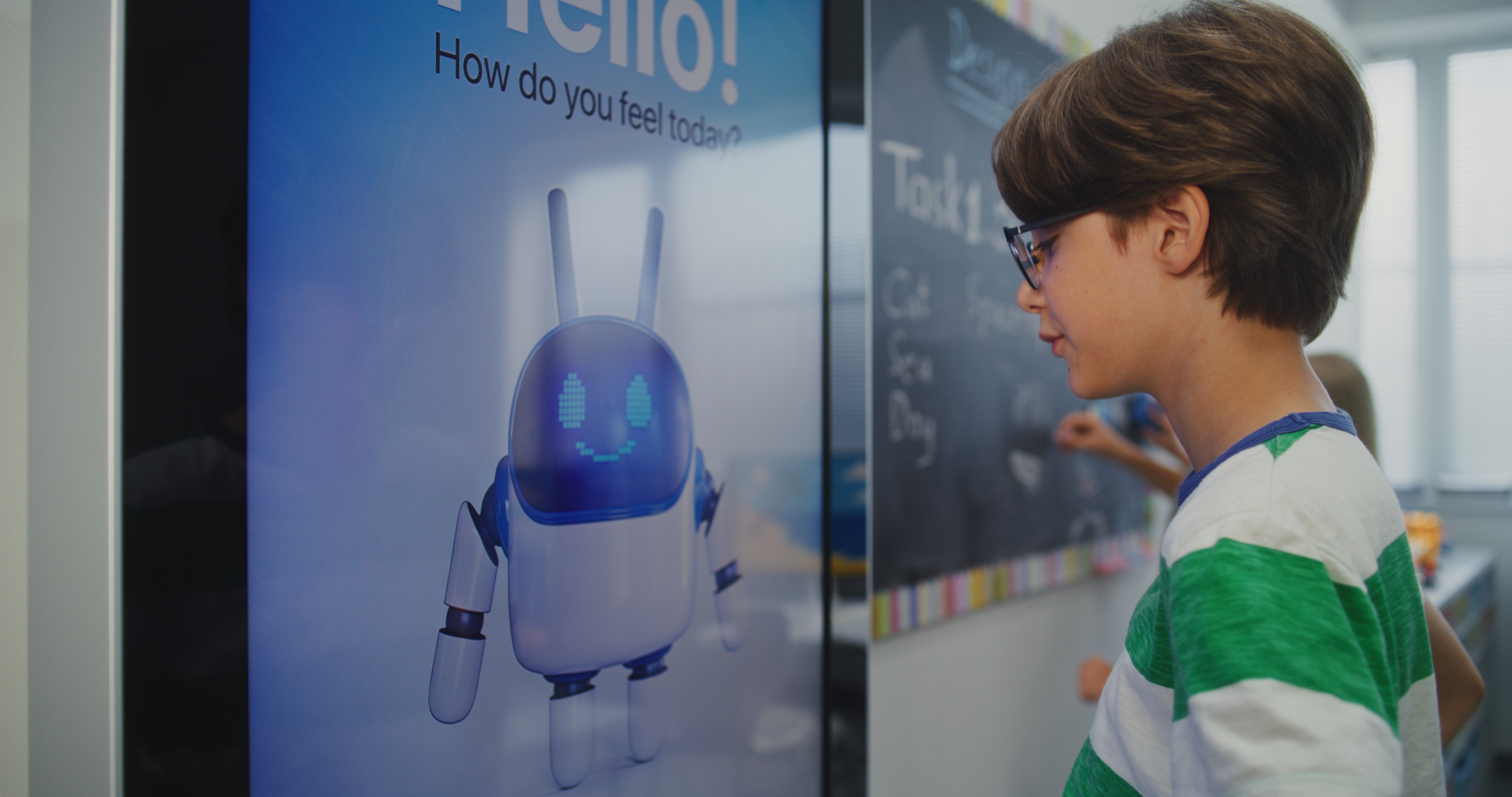
GenAI agents, as LLM-powered avatars capable of verbal interaction, could offer an interesting aid to language teachers seeking to improve their students’ oral skills. Platforms such as Talos Languages allow language practitioners to create highly personalised assignments by customising parameters such as skill level, conversation duration, speaking speed and target tenses, vocabulary or questions. During the task, pupils can benefit from real-time scaffolding, including captions and key vocabulary display aiming to reduce cognitive load and build confidence. After a session, the platform provides automated feedback with a score and comments on clarity, confidence and vocabulary use, promoting an interesting motivational loop for students.
It could be argued that this type of interactive dialogue, albeit virtual, addresses fundamental principles of language acquisition. As Smith and Conti (2023) highlight, effective learning requires not just comprehensible input, but also interaction and learner output. This is supported by key theories such as Long’s Interaction Hypothesis, which posits how dialogue and meaning negotiation aid comprehension, and Swain’s Output Hypothesis, which suggests that producing language helps learners notice grammatical forms and identify linguistic gaps, thereby fostering accuracy. By simulating these conditions in a controlled and less pressured environment than the classroom, GenAI agents could help develop our pupils’ speaking skills.
Using AI as a Tool for Student Metacognition and Reflective Assessment
AI Transcription for Analysing Oral Assessments
Assessing students’ speaking proficiency is a challenging task. Language practitioners need to pay attention to various variables such as complexity, fluency or accuracy (Jiang et al., 2021) and intonation or pronunciation interplay under time pressure. Once the student utters their answers, they vanish and with them the evidence of their performance. This has always left me at unease, as right after the test, I question how much pupils take in from my oral feedback and how accurate this actually is.
With the aim of performing a better assessment of my students’ end of year speaking responses I resorted to Voicenotes, an AI app that records and transcribes in more than 100 languages. This tool helped me read their answers as transcripts and modify my initial marks for the different components gathered during the test. To make the process more pedagogically interesting, this year I decided to capitalise errors on the transcript and print them for pupils to correct on the post-assessment feedback lesson as a tool for reflexion and metacognition. Finally, I analysed their views through surveys, drawing connections to key research findings.
As Kessler et al. (2020) highlight, the primary benefit of reviewing a transcript is that it helps learners to consciously “notice” gaps between their intended meaning and their actual output. Schmidt’s (1990, 2001) Noticing Hypothesis deems crucial for language students to consciously register (i.e. notice) the input in order for it to become intake and lead to acquisition (cited by Kessler et al. 2020). A remarkable percentage of my students (Y10 and Y8: 100%; Y6: 84%) reported that the transcript helped them notice mistakes.
Most learners who identified mistakes cited grammar (specifically verb endings and adjective agreement) as the primary type of error the transcript revealed. This contradicts the findings from Kessler et al. (2020), which mention vocabulary and content but not grammar as the key types of errors that transcripts helped notice amongst pupils in their study.
Another interesting insight from the surveys was that it revealed a clear development in students’ metacognitive awareness with age. Years 6, 7 and 8 focused on foundational errors, with one Year 8 student realising, “I needed to work on words agreeing with my gender, which I hadn’t noticed before.” On the other spectrum, Year 10 pupils used the transcript for more strategic, higher-level reflection, noting the need to “add more level 9 structures and idioms” and “take a short time to structure the idea in my mind instead of just saying the first thing.” This aligns with the “automatisation” concept from Jiang et al. (2021), as they focus on complexity once foundational errors are visible.
It was pleasant to witness how students overwhelmingly see the value for future improvement. A strong majority of learners across all cohorts agreed that having access to transcripts would help them improve more quickly in the future (Y8: 100%; Y10: 92%; Y6: 90%).
Although AI-transcription apps show a great potential in languages, there is still room for refinement. For instance, students in Year 6 and Year 10 pointed out transcription errors. Similarly, I encountered how certain words mispronounced by students were “corrected’ in the transcript by the AI as described by Cámara-Arenas et al. (2023). They explain how Automatic Speech Recognition (ASR) tools prioritise communication and understanding intent and it will often “correctly” recognise a word that was, in fact, pronounced poorly. Therefore, the “human-in-the-loop” approach, where the teacher checks the transcript and underlines or capitalises sentences with errors is key to helping students notice and correct them in feedback sessions.
Conclusion
This analysis has shown how several AI technologies can be used in various stages of the language acquisition process, helping teachers to provide a rich, varied and learner-focused content, pupil-led speaking practice and opportunities for self-reflection.
While the focus is often on the AI tools themselves, a common thread emerging from the student surveys is a clear appreciation of the “human-in-the-loop”, that is the teacher who guides, scaffolds and adds human value to the process.
Ultimately, the challenge for language teachers is not simply to adopt these new tools, but to critically and creatively integrate them in their practice. Only then will practitioners unlock a new potential in language education.
These strategies cultivate students who are not only linguistically skilled but also adaptive, creative, and culturally fluent — all prepared to thrive in an increasingly complex world.
Language Learning that may be of interest:
Get a special discount by quoting code AISLMALL during CHECKOUT.
Books and E-books – Shanghai Book Traders

Shanghai Book Traders was established in 1950 and has a development history of over 70 years. It is a state-owned book import and export company with its headquarters located at Fuzhou Road, Huangpu District, Shanghai. It owns its own stores and warehousing centers and has branches overseas as well as several distribution centers in Asia, Europe and America. The company has established partnerships with thousands of publishing houses at home and abroad. Its business scope includes book retail, wholesale, import and export of books and periodicals, holding various book exhibitions at home and abroad, copyright trading, agency import and export, etc. Among them, the book import and export business holds over 70% of the market share in the East China region and has established business relations with most foreign-related schools and institutions in the region.
Language Learning – Speechsquare

Speechsquare by Melyngo Technology PTE LTD is an AI Speech Analytics company. They optimise the tutoring and assessment of oral skills. Their proprietary AI allows granular analysis of speech up to the phoneme, enabling instant visual and audio feedback for the learner and powerful analysis tools for language specialists. Speechsquare is available in 7 languages: English, Chinese, Korean, Japanese, Spanish, French, and German.
Leveled Reading Platform for Pre-K to Grade 8 – Chinese 1-2-Tree
Chinese 1-2-Tree is a unique leveled reading interactive learning platform designed to provide progressive leveled reading starting with 20 basic characters. Chinese 1-2-Tree provides teachers with a scaffolded leveled reading program that uses accessible digital technology to improve teaching effectiveness, save time, and reduce students’ workload. Chinese 1-2-Tree offers literacy essentials for every PreK-8 Chinese classroom. They offer a complete solution for reading instruction and student practice, perfect for use in class and at home.
Online English Classes for Kids – Novakid
Novakid is Europe’s #1 online English school for kids aged 4-12, trusted by families worldwide. With certified native-speaking teachers, it offers interactive lessons that make learning fun and effective. Using games, activities, and full-language immersion, Novakid helps kids build confidence and English fluency. Its CEFR-based curriculum ensures real progress, while parents appreciate the blend of high-quality education and enjoyable experiences that prepare children for future success.
References
- Hamilton C, Schulz J, Chalmers H et al. (2024) ‘Investigating the substantive linguistic effects of using songs for teaching second or foreign languages to preschool, primary and secondary school learners: A systematic review of intervention research’, System, 124: 103350. Available at: https://doi.org/10.1016/j.system.2024.103350.
- Jiang MYC, Jong MSY, Lau WWF et al. (2021) ‘Using automatic speech recognition technology to enhance EFL learners’ oral language complexity in a flipped classroom’, Australasian Journal of Educational Technology, 37(2): 110-131. Available at: https://doi.org/10.14742/ajet.6798
- Kessler M, Loewen S and Trego D (2020) ‘Synchronous VCMC with TalkAbroad: Exploring noticing, transcription, and learner perceptions in Spanish foreign-language pedagogy’, Language Teaching Research. Available at: https://doi.org/10.1177/1362168820954456.
- Smith S and Conti G (2023) The language teacher toolkit. [s.l.]: Independently published.
- Wang C and Zou B (2025) ‘D-ID Studio: Empowering Language Teaching With AI Avatars’, TESOL Journal, 16(2): e70034. Available at: https://doi.org/10.1002/tesj.70034.
- Yeo MA, Moorhouse BL and Wan Y (2025) ‘From Academic Text to Talk-Show: Deepening Engagement and Understanding with Google NotebookLM’, TESL-EJ, 28(4). Available at: https://doi.org/10.55593/ej.28112int.