Teacher feedback is widely recognised as a cornerstone of learning in second‑language (L2) academic writing, yet its impact ultimately depends on how students interpret and act upon it. A recent open‑access study in Language Testing in Asia investigated how Grade 12 learners in the Philippines engage with teacher comments on a position‑paper task, and why some disengage. Using semi‑structured interviews with ten students, the authors mapped cognitive, affective and behavioural strategies of engagement, and analysed reasons for disengagement through the lens of L2 writing self‑efficacy.
Conceptual Framing
The study integrates three strands of scholarship: student engagement with feedback (SETF), student feedback literacy, and self‑efficacy specific to L2 writing. Engagement is conceptualised across three dimensions—cognitive (understanding and judging feedback), affective (managing emotions towards feedback) and behavioural (taking action to revise)—drawing on Carless and Boud’s process‑focused view of feedback literacy. Self‑efficacy is treated as task‑specific, encompassing linguistic, performance, and self‑regulatory beliefs that shape how learners respond to feedback and persevere through revisions. This convergence argues that feedback uptake is not merely a function of comment quality but of learners’ confidence and capacity to use those comments productively.
Context and Method
The researchers conducted a multi‑case qualitative study with senior high school students (HUMSS track) in Metro Manila during pandemic‑era blended learning. Drafts were exchanged via Google Classroom; teachers provided detailed written comments using Microsoft Word’s review features; and interviews (with screen‑sharing) traced how students processed and implemented feedback across cycles of revision. Ethics approvals, informed consent (including parental consent), and intercoder verification procedures were applied, with coding agreement improved from 80% to 95% after discussion—strengthening the credibility of the thematic analysis.
Key Findings
- Engagement Strategies: Students reported concrete cognitive strategies (e.g., interpreting categorical feedback on content, organisation, and language, setting micro‑goals for revisions), affective strategies (e.g., reframing criticism, reducing anxiety by prioritising ‘quick wins’), and behavioural strategies (e.g., iteratively revising paragraphs, checking coherence against teacher prompts). Together, these strategies illustrate that effective uptake hinges on both skill and mindset: learners who believe they can improve tend to plan, monitor, and act on feedback more consistently.
- Reasons for Disengagement: Disengagement did not appear as a single event; it accumulated over time when students perceived gaps between their ability and task demands. The analysis linked disengagement primarily to low linguistic confidence (e.g., uncertainty about vocabulary and rhetorical conventions) and weak self‑regulation (e.g., difficulty managing emotions, procrastination, or sustaining revision effort). Students with lower L2 writing self‑efficacy were more likely to avoid challenging revisions, focus on perceived deficiencies, and miss deadlines, thereby limiting the benefits of even detailed teacher feedback.
- Implications for Practice: The authors argue that feedback engagement strategies should be explicitly embedded in academic writing instruction—teaching learners how to interpret comments, make judgements about their work, and plan feedforward actions. They also recommend targeted interventions to build self‑efficacy, such as guided goal‑setting, modelling revision strategies, and structured opportunities to experience successful change in drafts. At the programme level, aligning feedback processes with student feedback literacy—particularly managing affect—may help sustain engagement across iterative writing cycles.

Conclusion
Feedback literacy and self-efficacy are inseparable pillars of effective L2 academic writing. Teachers should move beyond simply providing comments and actively cultivate students’ ability to interpret, evaluate, and apply feedback. Embedding cognitive, affective, and behavioural strategies into classroom practice transforms feedback into a collaborative process that drives improvement. At the same time, addressing disengagement requires targeted efforts to strengthen learners’ confidence and self-regulation. Practical interventions—such as scaffolding language skills, modelling revision strategies, and setting incremental goals—can build self-efficacy and sustain motivation. By integrating these approaches, educators can ensure that feedback becomes not just a corrective tool but a catalyst for growth, empowering students to take ownership of their learning and achieve higher standards in academic writing.
For further insights into the study that shaped the article, see Harold Taguba & Sterling Plata (2025) Engagement Strategies and Reasons for Disengagement with Teacher Feedback: Insights from L2 Senior High School Students in Academic Writing.
Curriculum and Guides that may be of interest:
Get a special discount by quoting code AISLMALL during CHECKOUT.
Books and E-books – Shanghai Book Traders
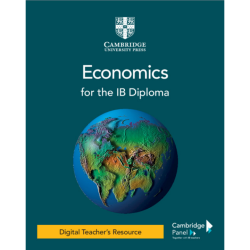
As a state-owned book company with a history of over 70 years, Shanghai Book Traders has established close cooperative relationships with major publishers around the world. They provide customers with various types of paper and electronic books. Their supply methods include imports and spot goods, and their sources include overseas and domestic books. The languages covered include Chinese, English, French, German, Spanish, Japanese and Korean. The types include textbooks, popular reading materials, children’s books, professional books and art books. They can also provide professional book cataloging services to meet the personalized needs of various customers.
Educational Resources – CK-12

The CK-12 is a non-profit organization which aims to increase access to low-cost K-12 education globally. It provides free and customizable K-12 open educational resources aligned to state curriculum standards.
K-12 Curriculum for Computer Science and AI – Code.org
Code.org is an education innovation nonprofit dedicated to the vision that every student in every school has the opportunity to learn about artificial intelligence (AI) and computer science (CS) as part of their core K-12 education.
Online Course Platform – MIT Open Course Ware (OCW)

The MIT Open Course Ware Educator Initiative supports and sustains open education teaching practices at scale. It is created to find pathways for discovering, adapting, and sharing the open educational resources (OER) on our platforms. OCW is also a place to connect with and inspire the teaching community at MIT.
Online Science Resource – Science Bob

Science Bob is a resource website created by science educator “Bob Pflugfelder” to make science fun and accessible for students and educators. It features a wide range of experiments, science fair project ideas, videos, and a section for answering reader-submitted questions, all designed to encourage scientific curiosity and critical thinking.