When we think of school, we often picture rows of desks, whiteboards, and standardised schedules. Yet learning does not have to stay within four walls. A well-chosen environment can shift how students engage, what they notice and remember, and how they connect learning with the real world. Teaching outside the classroom opens doors to richer experiences, authentic inquiry, and new forms of collaboration.
With growing interest in alternative learning environments, this article explores why educators should consider place as a design element — not just a location. The ideas below draw on research from Project Zero researcher Daniel Wilson at the Harvard Graduate School of Education, whose study of learning environments emphasises the relationship between purpose, practice, and place.

Key Takeaways:
- Designing for Coherency: A meaningful learning experience depends on how well your learning goals, teaching methods and chosen environment reinforce one another. When taking a lesson outside the classroom, focus on intentionality: consider how the characteristics of the space will support the task, the behaviours you want to see, and the type of thinking students will need to do. A simple starting question is: What about this place that helps students achieve the purpose of this lesson?
- Treating Place as a Learning Tool, Use the Environment to Shape Thinking and Behaviour: Places carry their own affordances — and can function as a setting, a partner, an object of study, or a bridge to bigger questions — from natural surroundings and quiet corners to community spaces rich in culture or history. As an educator, start by identifying one behaviour or way of thinking you want to encourage, such as observation, group collaboration, or reflective discussion, and then decide whether the place will be used at, with, of, or through that environment, choosing a setting whose characteristics naturally support that aim.
- Plan With Learning Paths, Design Sequences of Local Learning Stops: Rich learning environments often exist close to home — in neighbourhoods, parks, local businesses, or libraries — and can be linked together into intentional “learning paths” made up of multiple stops. Beginning with familiar community places helps ground learning in students’ real lives and communities, as seen in models where schools map neighbourhood routes and teach different parts of the curriculum at each stop. To start: consider mapping a sequence of nearby locations that together support upcoming units in your curriculum, each chosen for a specific concept or skill. Even a short visit or simple path with a few stops can deepen understanding, build connections, and spark student curiosity.
Opening up teaching beyond traditional classrooms by intentionally using place invites educators to reimagine learning in a richer, more connected way. When purpose, practice, and place come together, you create opportunities for deeper engagement, real-world connections, and more meaningful learning experiences.
If you are ready to explore this further, we encourage you to examine the work of Project Zero and their Designing Learning Paths resource — it offers a compelling framework for rethinking how you view and design educational spaces.
Curriculum and Guides that may be of interest:
Get a special discount by quoting code AISLMALL during CHECKOUT.
AR Tool – StoryTellAR
StoryTellAR by 3Education is committed to assisting schools in adapting technology to cultivate self-learning ability for the new generation. We are all here to help teachers in achieving their educational goals. Empowered by 3 Hong Kong’s strongest 5G network, we provide a wide range of teaching and learning solutions to help students develop their strengths.
Books and E-books – Shanghai Book Traders
Shanghai Book Traders was established in 1950 and has a development history of over 70 years. It is a state-owned book import and export company with its headquarters located at Fuzhou Road, Huangpu District, Shanghai. It owns its own stores and warehousing centers, and has branches overseas as well as several distribution centers in Asia, Europe and America. The company has established partnerships with thousands of publishing houses at home and abroad. Its business scope includes book retail, wholesale, import and export of books and periodicals, holding various book exhibitions at home and abroad, copyright trading, agency import and export, etc. Among them, the book import and export business holds over 70% of the market share in the East China region and has established business relations with most foreign-related schools and institutions in the region.
Curriculum and Guides for Coding – BSD Build
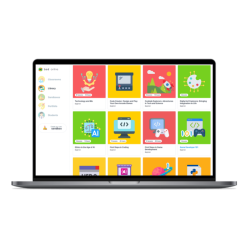
BSD (Build Something Different) is an international team of social entrepreneurs, technologists, and educators dedicated to empowering the kids of today with the tools for tomorrow. It has empowered students by enabling educators to bring the technology, 21st century and competencies, and real-world professional skills into everyday lessons through project-based curricula for students aged 6–18, delivered on an easy-to-use online platform with comprehensive training and year-round support. Certified by Digital Promise and the CPD Standards Office, their programs are mapped to major international standards and can be implemented immediately by teachers with no prior technology experience, across technology courses, core subjects, after-school activities, and holiday tech camp. Now, BSD Education now works closely with both students and teachers to prepare learners for the jobs of the future and make digital skills truly accessible to every classroom.
Educational Resources – CK-12
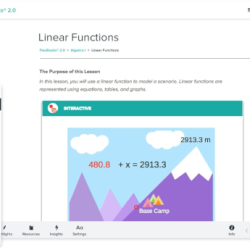
CK-12 Foundation revolutionises education by providing free, high-quality learning resources for students and educators globally. Their mission is to reduce the cost of academic textbooks for K-12 education worldwide. CK-12 leverages technology to offer customizable digital textbooks, interactive simulations, adaptive practice, and real-world applications, making learning engaging and effective.
Online Course Platform – MIT Open Course Ware (OCW)

MIT OpenCourseWare (OCW) is a free and open publication of educational materials from thousands of MIT courses, available online to anyone. It includes materials such as syllabi, lecture notes, assignments, exams, and sometimes video lectures and textbooks, but it does not offer academic credit or certification. The initiative was launched to provide a broad range of MIT’s curriculum freely and openly, inspired other institutions to share their own open educational resources, and allows users to learn at their own pace.